The 2:47pm Slump: A Field Guide to Surviving the Afternoon Wall
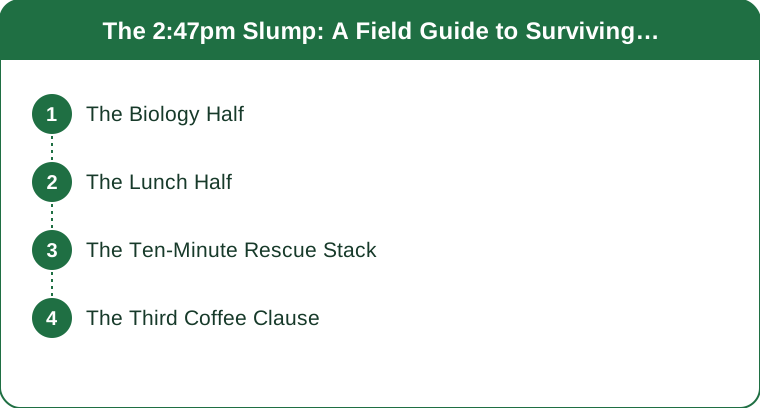
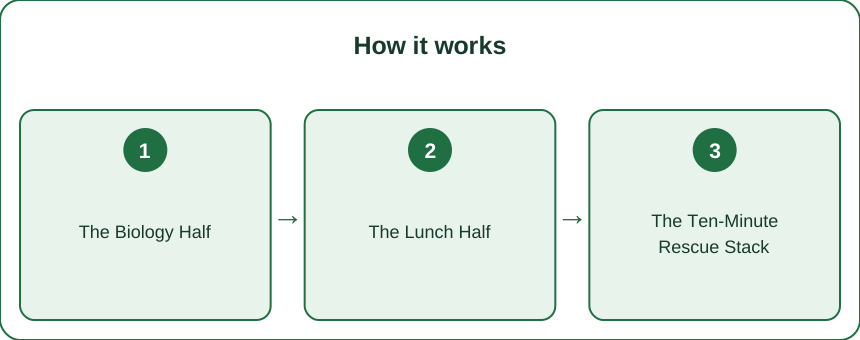
Quick Answer: The afternoon slump is roughly half circadian biology — a scheduled post-lunch dip you can’t cancel — and half your lunch. Flatten the lunch half with a protein-forward meal, then rescue the biology half with a ten-minute stack: stand, drink water, walk briskly or take stairs, get daylight if you can. Movement outperforms a third coffee and doesn’t invoice your bedtime.
It arrives daily with eerie punctuality. Somewhere around 2:47pm, gravity doubles, the screen goes slightly abstract, and the vending machine begins whispering your name.
Here’s the useful part: the slump has two separate causes, and only one of them is negotiable. Both respond to the same ten-minute intervention.

Why do I get tired every afternoon?
Half of it is your circadian rhythm. There’s a well-documented dip in alertness in the early-to-mid afternoon, roughly 12 to 14 hours after your natural low point in the night. It’s a secondary trough built into the 24-hour cycle, and it happens whether or not you ate lunch.
The siesta was institutional wisdom, not laziness. Cultures that built an afternoon rest into the day were reading a real signal.
You cannot cancel the dip. You can surf it: schedule shallow work there — email, admin, meetings that don’t need much from you — and protect your peaks (typically mid-morning and early evening) for anything that requires real thinking.
The other half is dehydration and posture, both of which sneak up. Which brings us to the part that’s fully under your control.
Does lunch make the afternoon slump worse?
Substantially, yes. A refined-carbohydrate lunch books a glucose crash right on top of the natural dip. Double gravity.
What causes the worst crashes: a large portion of quick-digesting carbohydrate with little protein, fat or fiber. Big sandwich on white bread, pasta bowl, fried rice, anything from the “beige and enormous” category.
What flattens it:
- Protein first, around 25 to 30 grams. Chicken, fish, eggs, tofu, legumes, Greek yogurt.
- Vegetables and fiber alongside — they slow gastric emptying and blunt the glucose rise.
- Some fat. Olive oil, avocado, nuts.
- Moderate portion. Very large meals produce more post-meal sleepiness regardless of composition.
- A ten-minute walk after eating. This measurably reduces the post-meal glucose peak, and it’s the highest-return ten minutes in the whole day.
Tomorrow’s slump is decided at today’s noon. That’s the single most useful sentence here.

What’s the ten-minute rescue stack?
When the wall arrives anyway, run these in order. Total cost: ten minutes. Total effect: mildly suspicious.
- Stand up. Immediately. Sitting still is amplifying everything.
- Drink a full glass of water. A meaningful share of afternoon fatigue is mild dehydration wearing a costume. Check the last time you drank anything — most people can’t remember.
- Walk briskly for 8 to 10 minutes, or take stairs. In studies comparing short bouts of stair-climbing to caffeine for afternoon alertness, movement holds up remarkably well — and it works within minutes.
- Get daylight if it’s available. Even five minutes outside provides a light signal that supports alertness. A window seat is a distant second, but it’s not nothing.
- Do a long-gaze eye reset. Twenty seconds looking at something at least 20 feet away. Screen-focused eye strain contributes more to the “foggy” feeling than people credit.
If you can only do one: the walk. It covers movement, often daylight, and it interrupts the posture that’s making it worse.
What about the third coffee?
It works today and invoices tonight.
The mechanism: caffeine’s half-life is roughly 5 to 6 hours for most adults, and considerably longer for slow metabolizers. A 3pm coffee means a meaningful fraction of that caffeine is still circulating at 9pm, and a smaller but real amount at midnight.
The loop this creates: afternoon coffee → delayed or lighter sleep → more tired tomorrow → bigger afternoon slump → more coffee. Plenty of people have been running this loop for years without connecting the two ends.
A workable caffeine cutoff is 8 to 10 hours before bed — so roughly 1pm to 2pm for an 11pm bedtime. If that sounds impossible, try moving it 90 minutes earlier for two weeks and see what happens to your mornings.
The alternatives that don’t carry the debt: the walk, water, a short daylight break, or a genuine 15 to 20 minute nap if your situation allows one. Keep naps under 25 minutes to avoid waking from deep sleep groggy, and don’t nap after about 3pm.
5 Mistakes Everyone Makes at 2:47pm
- Reaching for sugar. The vending machine solution produces a 25-minute rescue and a worse crash at 3:30. If you need food, make it protein.
- Scheduling deep work in the trough. You’re fighting your own biology and producing your worst output of the day. Move it.
- Not moving at all. Three hours of unbroken sitting compounds everything — circulation, alertness and posture all degrade together.
- Caffeine after 2pm. The debt is real even when you can’t feel it, and slow metabolizers pay double.
- Blaming willpower. It’s a circadian dip plus a glucose curve plus dehydration. None of those respond to trying harder, and all three respond to a walk.
When is afternoon fatigue worth investigating?
A mild, predictable afternoon dip is normal. Worth a conversation with a doctor if you have:
- Overwhelming daytime sleepiness despite 7 to 9 hours of sleep
- Fatigue with loud snoring or gasping at night (possible sleep apnea)
- Fatigue plus weight change, temperature intolerance or hair loss (thyroid)
- Persistent exhaustion with breathlessness or unusual pallor (anemia — ask for ferritin, particularly for menstruating women)
- Extreme thirst, frequent urination, or a slump that’s dramatically worse than it used to be
Everyday 2:47pm gravity is biology. Falling-asleep-at-your-desk fatigue is a symptom.
FAQ
Is it normal to feel tired every afternoon?
Yes — a post-lunch alertness dip is a normal feature of the circadian cycle, roughly 12 to 14 hours after your night-time low. What’s not normal is fatigue severe enough to interfere with functioning despite adequate sleep.
Does a nap help with the afternoon slump?
A 15 to 20 minute nap is genuinely effective, provided you keep it short and take it before about 3pm. Longer naps risk waking from deep sleep groggy, and late naps eat into that night’s sleep pressure.
What should I eat for lunch to avoid the crash?
Protein-forward — around 25 to 30g — plus vegetables and some fat, in a moderate portion. Then walk for ten minutes afterward. That combination flattens the glucose curve more than any single food choice.
TL;DR:
- The slump is half circadian dip (uncancellable — schedule shallow work there) and half lunch (very fixable).
- Protein-forward lunch, moderate portion, plus a 10-minute post-meal walk.
- Rescue stack: stand, water, 8–10 min brisk walk or stairs, daylight, long-gaze eye reset.
- The 3pm coffee attends your bedtime. Cut caffeine 8 to 10 hours before bed.
- Predictable dip = biology. Overwhelming daily exhaustion = get bloodwork.
Keep Reading
This article is for general informational purposes only and is not medical advice. Always consult a qualified health professional for guidance specific to you.