Why Do You Sometimes Crash After Eating a Genuinely Healthy Meal?
Quick Answer: A post-meal energy dip is partly a normal physiological response (blood flow shifts toward digestion, and certain nutrients trigger natural drowsiness signals) that can happen even after a genuinely balanced meal, but it’s often made worse by portion size being larger than needed, a meal skewed heavily toward carbohydrates even if ‘healthy,’ or eating too quickly — the meal being nutritious doesn’t automatically prevent a crash if the overall composition or portion still triggers the same digestive and blood-sugar shifts.
‘Healthy’ and ‘won’t cause a dip’ aren’t the same thing, since the crash mechanism responds more to meal composition and size than to whether the ingredients are considered nutritious.

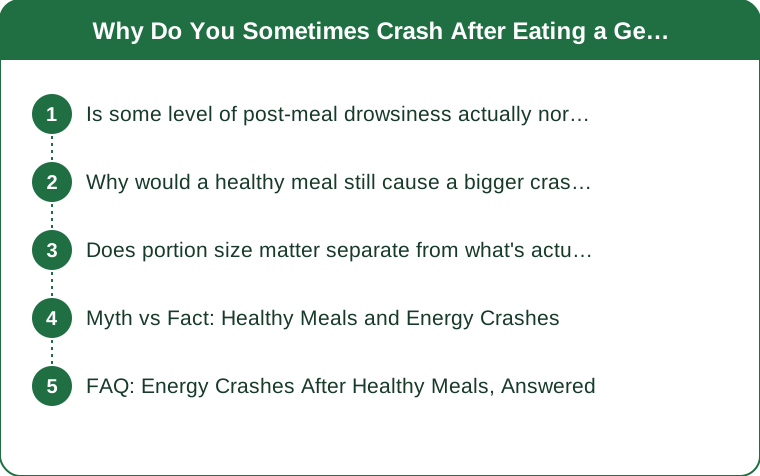
Is some level of post-meal drowsiness actually normal regardless of what’s eaten?
Yes — digestion genuinely redirects some blood flow toward the digestive system and triggers certain hormonal signals (including natural increases in serotonin and melatonin precursors from some foods) that create a mild, normal dip in alertness after any substantial meal, healthy or not.
Why would a healthy meal still cause a bigger crash than expected?
Even a nutritious meal that’s disproportionately carbohydrate-heavy relative to protein and fat can cause a more pronounced blood sugar rise and subsequent dip than a more balanced macronutrient distribution, since the blood sugar mechanism responds to the ratio and type of carbohydrate present, not to whether the meal is otherwise considered healthy.

Does portion size matter separate from what’s actually being eaten?
Yes — a larger portion, even of nutritious food, requires more digestive effort and can produce a more noticeable energy dip than the same food in a smaller, more moderate portion, which is why eating ‘healthy’ in a large quantity doesn’t fully protect against a crash.
Myth vs Fact: Healthy Meals and Energy Crashes
Myth: A meal being nutritionally healthy means it won’t cause an energy dip. Fact: Composition (carb-to-protein-to-fat ratio) and portion size matter more for the crash mechanism than overall nutrition quality.
Myth: Post-meal drowsiness always signals something is wrong. Fact: A mild dip after a substantial meal is a normal physiological response, not necessarily a health problem.
FAQ: Energy Crashes After Healthy Meals, Answered
Does eating slower actually reduce the severity of a post-meal crash?
Yes, eating more slowly gives satiety and blood sugar regulation systems more time to respond appropriately, which can meaningfully soften the crash compared to eating the same meal quickly.
Should protein be prioritized specifically to avoid this kind of crash?
Including a solid protein portion alongside carbohydrates tends to blunt the blood sugar swing that drives more pronounced crashes, making it a reasonable practical adjustment.
When does a post-meal crash warrant seeing a doctor rather than just adjusting meal composition?
If crashes are severe, accompanied by other symptoms like dizziness or shakiness, or happen consistently regardless of meal adjustments, it’s worth discussing with a doctor to rule out a blood sugar regulation issue.
TL;DR:
- A mild post-meal energy dip is a normal physiological response to digestion, regardless of food quality
- A carb-heavy meal, even a healthy one, can still cause a more pronounced blood sugar swing
- Portion size affects crash severity independently of whether the food itself is nutritious
- Eating slower and prioritizing protein alongside carbs both help soften the effect
‘Healthy’ doesn’t automatically mean ‘won’t cause a dip’ — meal composition and portion size drive the crash mechanism more directly than overall nutrition quality.
Keep Reading
This article is for general informational purposes only and is not medical advice. Always consult a qualified health professional for guidance specific to you.