The Specific Foods Most Likely to Trigger an Energy Crash — and What to Eat Instead
Quick Answer: Refined-carb-only meals with little protein or fiber — a plain bagel, white rice bowls without protein, sugary yogurt, fruit juice on an empty stomach — cause the sharpest blood sugar spikes and crashes. Pairing any of these with protein, fat, or fiber flattens the spike and prevents the crash that follows about 90 minutes later.
You eat lunch, feel fine for an hour, then hit a wall so hard you’re checking the clock wondering how it’s only 2pm. The crash isn’t random — it’s a predictable response to specific, common food combinations, and it’s fixable without cutting out any of the foods themselves.

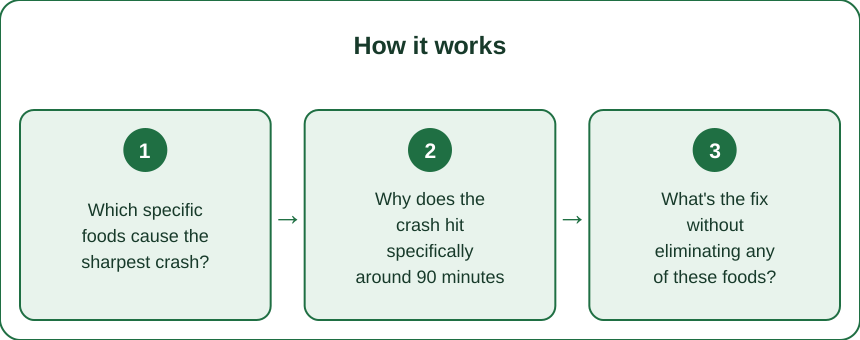
Which specific foods cause the sharpest crash?
Fruit juice and smoothies without protein, white bread or bagels alone, sugary yogurt or granola bars, and white rice bowls with minimal protein are the most common crash triggers, since each delivers a fast glucose spike with nothing to slow absorption. The crash isn’t caused by the food being “unhealthy” in a general sense — it’s caused by the speed at which glucose enters the bloodstream.
Interestingly, some foods marketed as energy-supporting (many granola and protein bars) are functionally similar to candy bars in glycemic impact once you check the actual sugar-to-fiber ratio on the label.
Why does the crash hit specifically around 90 minutes later?
A fast glucose spike triggers a strong insulin response, which often overshoots and pulls blood sugar down below baseline about 60-90 minutes after eating — this overshoot, not simple digestion fatigue, is the actual mechanism behind the crash feeling.
This timing is consistent enough that people can often predict their own crash window once they start tracking it against specific meals, which makes it a useful diagnostic: a 1:30pm slump after a 12pm lunch points squarely at that meal’s composition.

What’s the fix without eliminating any of these foods?
Pair the same foods with protein, fat, or fiber rather than avoiding them: add nut butter to that bagel, protein to the rice bowl, or eat fruit with a handful of nuts instead of juice alone. The glucose still enters your system, just more slowly, which prevents the sharp insulin overshoot that causes the crash.
A useful rule of thumb: no meal or snack should be carb-only. Even a small amount of protein or fat (10-15g) alongside a carb-heavy food measurably flattens the resulting blood sugar curve.
Myth vs Fact: Energy Crashes Are About Willpower or Sleep
Myth: An afternoon crash mostly means you didn’t sleep enough. Fact: Sleep matters, but a crash that hits reliably 60-90 minutes after specific meals is a blood sugar response, independent of how well-rested you are.
Myth: Cutting carbs entirely is the only fix. Fact: Pairing carbs with protein or fat solves most of the problem without requiring a low-carb approach at all.
FAQ: Energy Crash Food Questions, Answered
Does the order I eat food in a meal matter?
Some research suggests eating protein and vegetables before the carb-heavy portion of a meal can blunt the resulting glucose spike, though pairing them together works nearly as well for most people.
Are all fruit juices equally likely to cause a crash?
Most are similar in this respect, since juicing removes the fiber that would otherwise slow sugar absorption — whole fruit is meaningfully less crash-inducing than juice from the same fruit.
Does caffeine make the crash worse?
It can mask the early signs and then compound the drop once it wears off around the same window, which is why a coffee-and-pastry combination is a particularly reliable crash setup for a lot of people.
TL;DR:
- Carb-only foods (juice, plain bagels, sugary yogurt) cause the sharpest glucose spikes and crashes
- The crash hits 60-90 minutes later from an insulin overshoot, not general digestion fatigue
- Pair carbs with protein, fat, or fiber rather than eliminating them entirely
- Whole fruit crashes you less than juice from the same fruit, since fiber slows absorption
Keep Reading
This article is for general informational purposes only and is not medical advice. Always consult a qualified health professional for guidance specific to you.