Why Energy Crashes Almost Always Hit Around 2 PM (And What Actually Fixes It)
Quick Answer: The 2 PM energy crash is driven by a combination of a natural dip in circadian alertness that occurs in early-to-mid afternoon regardless of food intake, combined with a post-lunch blood sugar swing if the meal was high in refined carbohydrates — the circadian dip is largely unavoidable, but the blood sugar component is highly modifiable through meal composition, and addressing it noticeably softens the overall crash.
Most people assume the 2 PM crash is entirely about what they ate for lunch, but a real circadian component is baked in regardless of meal choice.

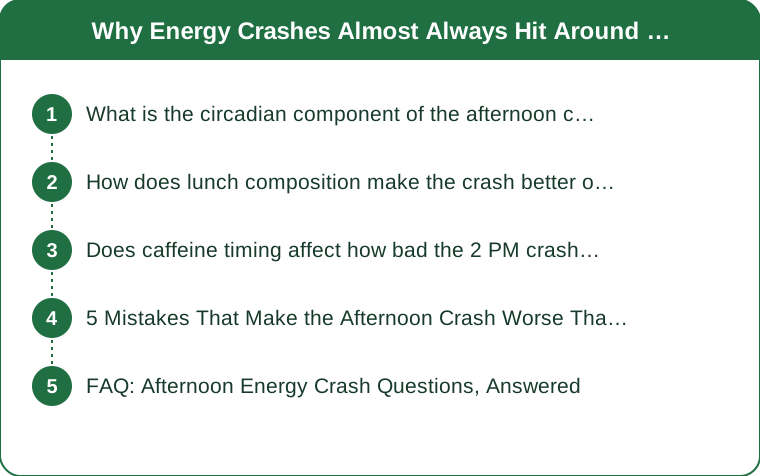
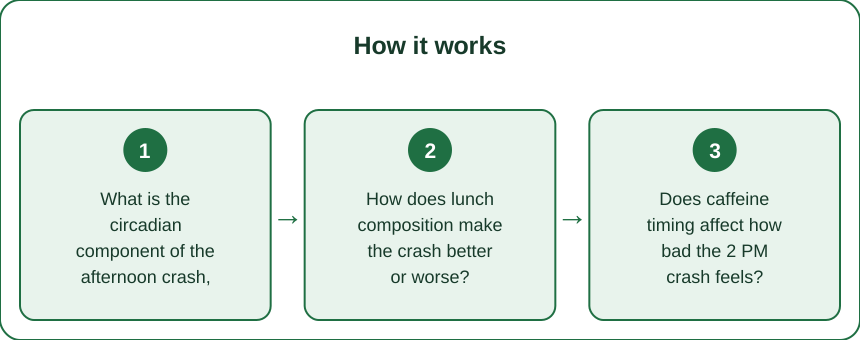
What is the circadian component of the afternoon crash, and why does it happen regardless of food?
Core body temperature and alertness naturally dip in a predictable pattern in early-to-mid afternoon, a well-documented circadian rhythm effect sometimes called the ‘post-lunch dip’ even in studies where subjects didn’t eat lunch at all. This means a portion of the 2 PM slump would occur even with a perfect, blood-sugar-stable meal — it’s a built-in feature of the daily alertness cycle, not purely a food consequence.
This circadian dip tends to be more pronounced in people who are already somewhat sleep-deprived, since overall alertness reserves are lower to begin with, making the natural afternoon dip feel more severe.
How does lunch composition make the crash better or worse?
A lunch heavy in refined carbohydrates with little protein or fiber causes a rapid blood sugar spike followed by a corresponding drop, and that drop compounds directly on top of the natural circadian dip, producing a crash that feels much more severe than the circadian dip alone would cause. A lunch built around protein, fiber, and slower-digesting carbohydrates produces a flatter blood sugar curve, meaning there’s no added crash stacked on top of the circadian dip — the afternoon still feels a bit lower-energy, but without the sharp, uncomfortable drop.
Portion size interacts with this too: a very large lunch, even a well-balanced one, diverts more blood flow to digestion and can itself contribute to a feeling of sluggishness, separate from the blood-sugar-swing mechanism.

Does caffeine timing affect how bad the 2 PM crash feels?
Caffeine consumed too late in the morning can partially wear off right around the natural circadian dip window, making the crash feel like it’s arriving ‘on schedule’ with the caffeine drop rather than being a separate afternoon phenomenon. Timing a smaller caffeine dose slightly later — closer to early afternoon rather than only in the morning — can help smooth over the natural dip for people who tolerate afternoon caffeine well, though this needs to be balanced against not disrupting nighttime sleep.
5 Mistakes That Make the Afternoon Crash Worse Than It Needs to Be
1. Eating a large, refined-carbohydrate-heavy lunch that spikes and then drops blood sugar sharply. 2. Front-loading all caffeine intake in the early morning, so it wears off right as the circadian dip begins. 3. Skipping any afternoon movement, which can help counteract natural alertness dips. **4. Treating the crash as a signal to reach for more sugar, which restarts the spike-drop cycle. **5. Not addressing chronic sleep debt, which measurably deepens the natural circadian afternoon dip.
FAQ: Afternoon Energy Crash Questions, Answered
Is a 2 PM energy crash a sign of a health problem?
An occasional, mild crash is a normal circadian pattern, but a severe, disruptive crash every single day, especially with other symptoms, is worth mentioning to a doctor to rule out issues like blood sugar regulation problems. This is general information, not medical advice.
Does a short nap actually help with the afternoon crash?
A short nap (10-20 minutes) can meaningfully restore alertness for many people without causing the grogginess longer naps sometimes produce, making it a reasonably effective, drug-free option where a nap is logistically possible.
Will the crash ever go away completely with lifestyle changes?
The circadian dip itself is unlikely to disappear entirely since it’s a built-in daily rhythm, but addressing sleep debt, meal composition, and caffeine timing typically flattens the crash enough that it stops feeling disruptive.
TL;DR:
- A real circadian alertness dip occurs in early-to-mid afternoon regardless of what or whether you eat
- Refined-carbohydrate-heavy lunches stack an added blood sugar crash on top of that natural dip
- Caffeine timed too early in the morning can wear off right as the crash hits, making it feel worse
- Sleep debt deepens the natural circadian dip, independent of food choices
The 2 PM crash isn’t purely about lunch choice — it’s a mix of an unavoidable circadian dip and a very modifiable food component.
Keep Reading
This article is for general informational purposes only and is not medical advice. Always consult a qualified health professional for guidance specific to you.