Why Mild Dehydration Might Be Behind Your Afternoon Energy Crash
Quick Answer: Research on mild dehydration (as little as 1-2% of body water loss, well before noticeable thirst) has repeatedly shown measurable drops in energy, mood, and cognitive performance, meaning an afternoon slump that gets blamed on blood sugar or poor sleep may actually be a hydration issue that’s easy to test for and fix within an hour of drinking water.
Thirst is a lagging indicator of dehydration, not a leading one, which is exactly why mild dehydration goes unnoticed as an energy cause for so many people.

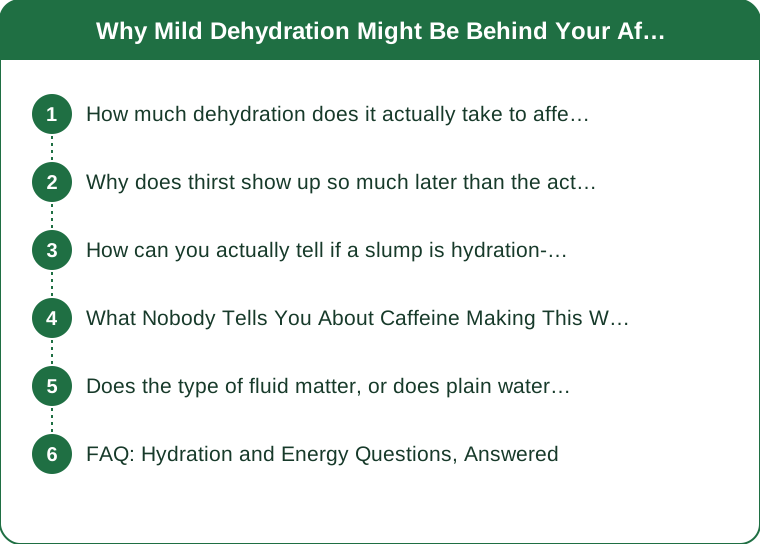
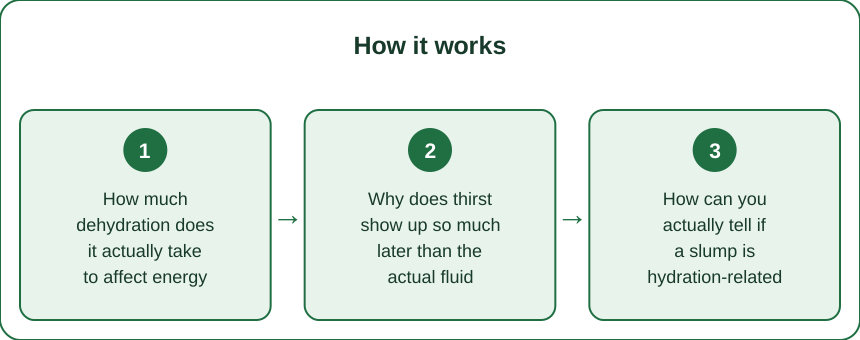
How much dehydration does it actually take to affect energy noticeably?
Studies on mild dehydration have found measurable effects on mood, fatigue, and concentration at fluid losses as small as 1-2% of body weight — for an average adult, that’s roughly the amount lost through a few hours of normal daily activity without replacing fluids, well before the point where most people would consciously feel thirsty.
Why does thirst show up so much later than the actual fluid deficit?
The body’s thirst mechanism is triggered by changes in blood concentration that lag behind actual fluid loss, meaning by the time you feel clearly thirsty, mild dehydration effects on energy and focus may already have been present for a while — which is part of why using thirst alone as a hydration gauge tends to underestimate the problem.
How can you actually tell if a slump is hydration-related versus something else?
A practical test is drinking 16-20 ounces of water and giving it 45-60 minutes — dehydration-related fatigue typically shows at least partial improvement in that window, while a slump caused primarily by blood sugar dips, poor sleep, or general fatigue usually won’t respond the same way to water alone.

What Nobody Tells You About Caffeine Making This Worse
Caffeinated beverages have a mild diuretic effect, meaning relying on coffee to power through an afternoon slump can, in some cases, mildly compound the dehydration that’s partly causing the slump in the first place — this doesn’t mean avoiding caffeine entirely, but pairing it with actual water intake addresses both possible causes rather than just one.
Does the type of fluid matter, or does plain water work fine?
For addressing mild dehydration specifically, plain water is generally sufficient for most people under normal conditions — electrolyte drinks matter more after heavy sweating (intense exercise, hot weather) than for a typical desk-bound afternoon slump, where the fluid volume itself is usually the more relevant factor.
FAQ: Hydration and Energy Questions, Answered
How much water should I be drinking throughout the day to avoid this in the first place?
General guidance suggests roughly half your body weight in ounces as a daily baseline for most people, though needs vary with activity level and climate — the more relevant practical marker is checking urine color, aiming for pale yellow rather than dark.
Can drinking too much water also cause fatigue?
In rare cases, excessive water intake without adequate electrolytes can dilute sodium levels and cause fatigue and other symptoms, but this typically requires drinking well beyond normal daily amounts in a short window, and isn’t a practical concern for someone drinking water at a normal pace throughout the day.
Is coffee or tea ‘canceled out’ by their diuretic effect, meaning they don’t count toward hydration?
No — despite the mild diuretic effect, research generally shows moderate caffeinated beverage consumption still contributes net positively to daily fluid intake for regular consumers, it’s just not quite as hydrating ounce-for-ounce as plain water.
TL;DR:
- Fluid losses as small as 1-2% of body weight can measurably affect energy and focus
- Thirst lags behind actual dehydration, so it’s an unreliable early warning sign
- A 45-60 minute water test can help distinguish hydration-related fatigue from other causes
- Plain water is generally sufficient for typical desk-bound dehydration, not just electrolyte drinks
Before reaching for more caffeine or blaming blood sugar, a glass of water and a 45-minute wait is a cheap, fast way to rule hydration in or out.
Keep Reading
This article is for general informational purposes only and is not medical advice. Always consult a qualified health professional for guidance specific to you.