The Complete Framework for Building a Daily Energy System That Doesn't Rely on Caffeine Alone
Quick Answer: A sustainable daily energy system layers four elements together rather than relying on any one fix — a consistent morning light and wake routine, protein-anchored meals spaced to avoid blood sugar crashes, movement breaks every 60-90 minutes, and a wind-down routine that protects sleep quality — because energy crashes are usually the compounding result of gaps across several of these areas at once, not a single missing habit.
Most energy content treats symptoms one at a time: tired at 3pm, drink more water; tired in the morning, get more sleep. Real, sustainable energy comes from how these pieces work together across a full day, and it’s worth understanding the system rather than chasing isolated fixes.

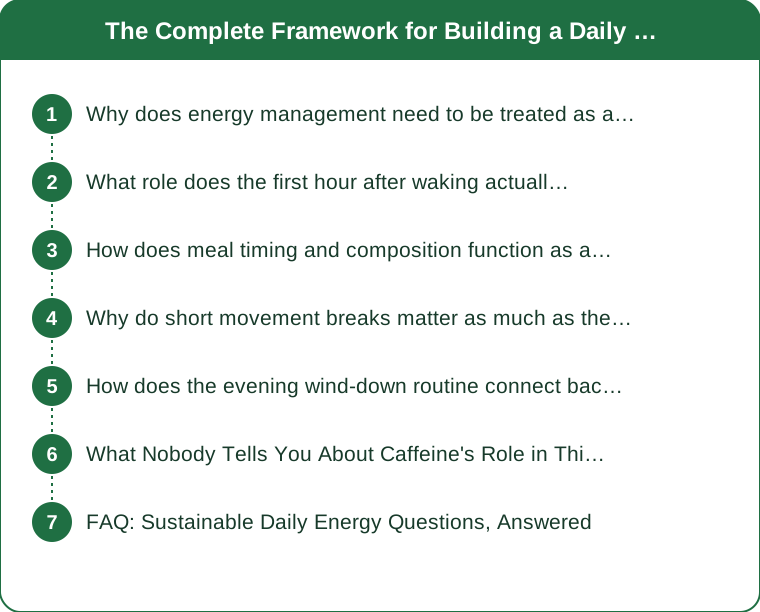
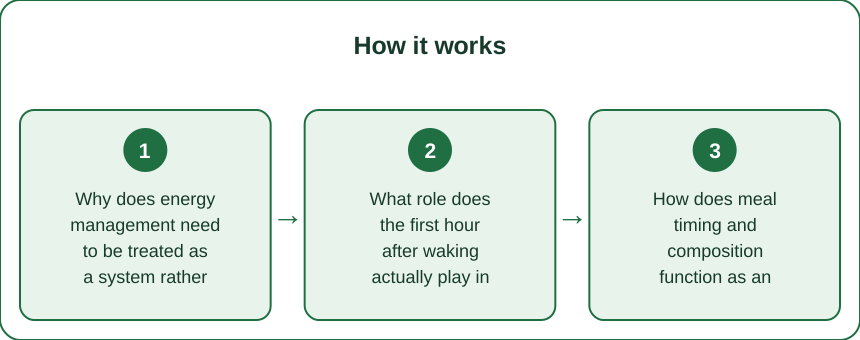
Why does energy management need to be treated as a system rather than isolated fixes?
Physical energy through a day is influenced by overlapping factors — circadian rhythm, blood sugar stability, hydration, movement, and sleep quality — that interact with each other rather than operating independently. A single isolated fix, like drinking more water, can genuinely help but often can’t fully compensate for a poor sleep pattern or blood sugar swings happening elsewhere in the day, which is why isolated-tip advice often produces only modest, inconsistent results.
Thinking in terms of a system means recognizing that a rough morning (skipped light exposure, poor sleep) sets a harder baseline for the whole day, and that afternoon fixes work better as reinforcement of a decent foundation than as a rescue for a day built on a poor one from the start.
What role does the first hour after waking actually play in the rest of the day’s energy?
Morning light exposure, ideally natural sunlight within the first 30-60 minutes of waking, helps anchor the body’s circadian rhythm, which in turn supports more stable energy and alertness patterns through the day compared to waking in dim indoor light and going straight to a screen. This is one of the most underrated levers in the whole system, in part because its effect shows up hours later rather than immediately, making the connection easy to miss.
A calm first hour — avoiding immediate high-stimulation input like urgent email or news — also reduces an early cortisol-stress stacking effect that can leave people feeling ‘wired but tired’ well before lunchtime, undermining energy for the rest of the day before it’s even really started.
How does meal timing and composition function as an energy management tool?
Meals anchored around adequate protein and fiber, rather than being carbohydrate-heavy alone, produce a more gradual blood sugar rise and fall, avoiding the sharp crash that follows a rapid spike — this is a major, frequently underappreciated driver of the classic mid-morning or mid-afternoon energy slump that many people otherwise blame entirely on sleep or stress.
Spacing meals and substantial snacks every 3-4 hours, rather than going long stretches without eating and then eating a large meal, also helps maintain more stable blood sugar and energy across the day, particularly for people prone to noticeable energy dips between meals.

Why do short movement breaks matter as much as they do for sustained energy?
Prolonged sitting is associated with reduced circulation and a measurable dip in alertness and perceived energy, even independent of actual physical fatigue — a short movement break (a 2-3 minute walk, some stretching, even standing and shifting position) every 60-90 minutes counteracts this by improving circulation and providing a brief alertness boost that a static, sedentary stretch of work doesn’t offer.
This doesn’t require a full workout to be effective — the research on ‘movement snacks’ suggests that frequency of brief movement throughout the day matters as much or more than the duration of any single movement break for this specific energy-maintenance purpose.
How does the evening wind-down routine connect back to next-day energy?
Sleep quality, not just sleep duration, is heavily influenced by the hour or so before bed — blue light exposure, late caffeine, and high-stimulation screen content all interfere with the natural melatonin release that supports both falling asleep and the depth of sleep once asleep, which directly affects how rested and energized the following day feels regardless of total hours slept.
A consistent wind-down routine — dimming lights, reducing screen use, a consistent bedtime — supports the circadian rhythm that the whole daily energy system depends on, closing the loop back to the morning light exposure that starts the cycle over again the next day.
What Nobody Tells You About Caffeine’s Role in This System
Caffeine isn’t the enemy of a sustainable energy system, but it works better as a supplement to a solid foundation than as a substitute for one — using caffeine to compensate for consistently poor sleep, skipped meals, or all-day sedentary stretches tends to produce diminishing returns and tolerance buildup over time, while the same amount of caffeine layered on top of a genuinely well-built daily system tends to feel more effective and requires less escalation to maintain the same effect.
FAQ: Sustainable Daily Energy Questions, Answered
How long does it typically take to notice a difference after building out a system like this?
Many people notice modest improvements within the first week, particularly around the mid-afternoon slump, with more substantial and consistent improvement over 3-4 weeks as circadian rhythm and meal-timing habits solidify.
Do I need to implement all four elements at once for this to work?
No — adding elements gradually, starting with whichever feels most missing currently (often meal timing or morning light), tends to be more sustainable than an all-at-once overhaul that’s harder to maintain.
Is it normal to still have an occasional low-energy day even with a solid system in place?
Yes — illness, poor sleep from external disruptions, and normal life variability mean occasional low-energy days happen regardless of how well-built the underlying system is; the goal is a better baseline and faster recovery, not zero variability. This is general information, not medical advice.
TL;DR:
- Sustainable energy comes from four interacting elements — morning light, meal timing, movement breaks, and a wind-down routine — not any single fix
- Morning light exposure anchors circadian rhythm and affects energy hours later, making its effect easy to miss
- Protein- and fiber-anchored meals prevent the blood sugar swings behind many afternoon slumps
- Caffeine works best as a supplement to this system, not a substitute for a missing piece of it
Pick the one element of this system that feels weakest in your current routine and start there this week, rather than trying to overhaul everything at once. This is general information, not medical advice.
Keep Reading
This article is for general informational purposes only and is not medical advice. Always consult a qualified health professional for guidance specific to you.