The Complete Guide to Why Your Energy Crashes — and What Each Timing Pattern Actually Means
Quick Answer: The timing of an energy crash is a genuine diagnostic clue — a crash within 30-60 minutes of eating points to blood sugar swings from meal composition, a crash 2+ hours after eating often points to a different metabolic pattern, and a crash at a consistent time of day regardless of meals points toward circadian rhythm rather than food at all.
Most energy-crash advice treats all afternoon tiredness as the same problem with the same fix. In practice, when a crash happens is one of the most useful clues to what’s actually causing it — and different timing patterns call for genuinely different fixes.

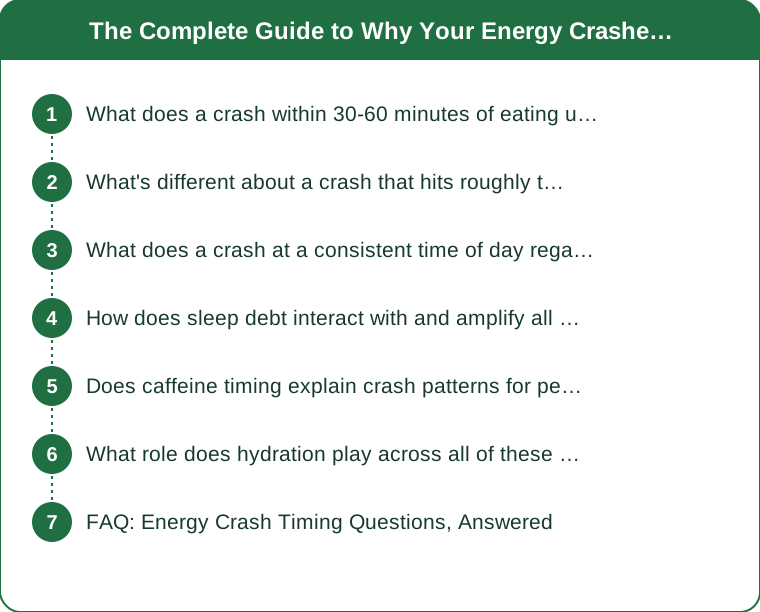
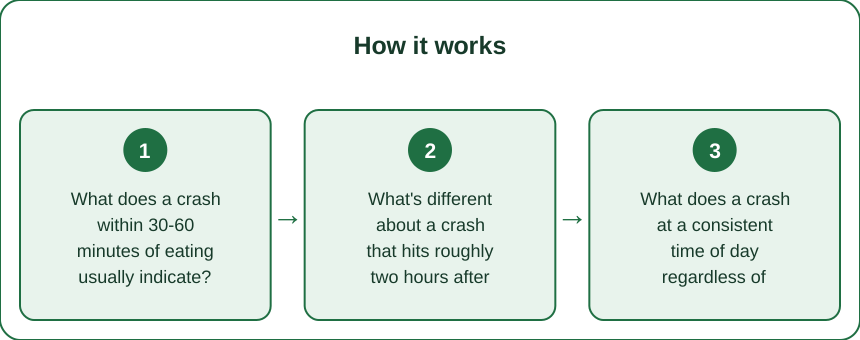
What does a crash within 30-60 minutes of eating usually indicate?
This timing lines up closely with a rapid blood sugar spike-and-drop pattern, most commonly triggered by a meal heavy in refined carbohydrates with little protein or fiber to slow glucose absorption — insulin responds quickly to the spike, often overshooting and pulling blood sugar below where it started, producing the fast-onset sleepy, foggy feeling within the first hour after eating.
What’s different about a crash that hits roughly two hours after eating?
A later crash (roughly 90 minutes to two hours out) sometimes reflects a slower-building reactive hypoglycemia pattern, or can be a sign that digestion itself is diverting significant blood flow and energy toward the gut for longer than a lighter meal would require — larger, richer meals are more commonly associated with this later-onset pattern than smaller ones.
What does a crash at a consistent time of day regardless of what or when you ate suggest?
A crash that reliably hits around the same clock time (commonly early-to-mid afternoon) independent of meal timing or content points more toward a natural circadian dip in alertness — humans have a well-documented biological alertness trough in the early-to-mid afternoon that exists regardless of eating, meaning food-focused fixes alone won’t fully resolve a crash driven primarily by this rhythm.

How does sleep debt interact with and amplify all of these timing patterns?
Insufficient or poor-quality sleep the night before lowers the threshold at which any of the above triggers produces a noticeable crash — a blood sugar dip or circadian trough that would be barely noticeable on a well-rested day can feel much more severe when sleep debt is already reducing baseline alertness, which is why the same meal or same time of day doesn’t always produce the same crash severity.
Does caffeine timing explain crash patterns for people who rely on it heavily?
A crash that hits as a stimulant like caffeine wears off (commonly 3-5 hours after the last dose, depending on individual metabolism) can look identical to a blood-sugar or circadian crash but has a distinctly different cause — caffeine withdrawal-style fatigue rather than an energy problem itself, and is worth distinguishing since the fix (adjusting caffeine timing and total intake) is different from a dietary or sleep fix.
What role does hydration play across all of these different crash timing patterns?
Mild dehydration independently reduces alertness and cognitive performance and can compound any of the above patterns — it rarely explains a crash entirely on its own, but checking hydration first is a low-cost step worth ruling out before assuming a more complex metabolic or circadian explanation, since the fix is immediate and simple if dehydration turns out to be a meaningful contributor.
FAQ: Energy Crash Timing Questions, Answered
Can someone experience more than one of these crash patterns in the same day?
Yes, this is common — a blood-sugar-driven crash after lunch and a separate circadian dip in the mid-afternoon can compound each other, which is part of why the total afternoon slump sometimes feels worse than either cause alone would predict.
Is it worth tracking energy crash timing for a week or two to identify the pattern?
Yes — a simple log noting when a crash hits relative to meals, caffeine, and sleep the night before over one to two weeks usually reveals a fairly clear dominant pattern, which makes targeting the right fix much more effective than guessing.
When does a persistent energy crash pattern warrant seeing a doctor rather than adjusting diet and sleep?
If crashes are severe, accompanied by other symptoms (dizziness, shakiness, heart palpitations), or don’t improve despite addressing diet, sleep, hydration, and caffeine timing, it’s worth ruling out underlying conditions like blood sugar regulation issues or thyroid function with a doctor.
TL;DR:
- A fast crash after eating usually points to blood sugar swings from meal composition
- A later, roughly two-hour crash can reflect a slower metabolic or digestive pattern
- A crash at a consistent clock time regardless of meals points toward circadian rhythm
- Sleep debt lowers the threshold at which any of these triggers produces a noticeable crash
- Caffeine withdrawal timing and dehydration can mimic or compound these patterns
This is general information, not medical advice — severe or persistent crashes with other symptoms are worth having checked by a doctor.
Keep Reading
This article is for general informational purposes only and is not medical advice. Always consult a qualified health professional for guidance specific to you.