The Complete Guide to Figuring Out Why You're Tired All the Time
Quick Answer: Persistent, unexplained tiredness usually comes from one or a combination of a handful of common causes — inadequate or poor-quality sleep, blood sugar swings from meal timing and composition, low iron or B12, chronic low-grade stress, dehydration, or an underlying medical condition — and working through them systematically is far more effective than guessing at a single fix.
This guide walks through each major cause, how to check for it, and when it’s time to involve a professional rather than keep experimenting alone.

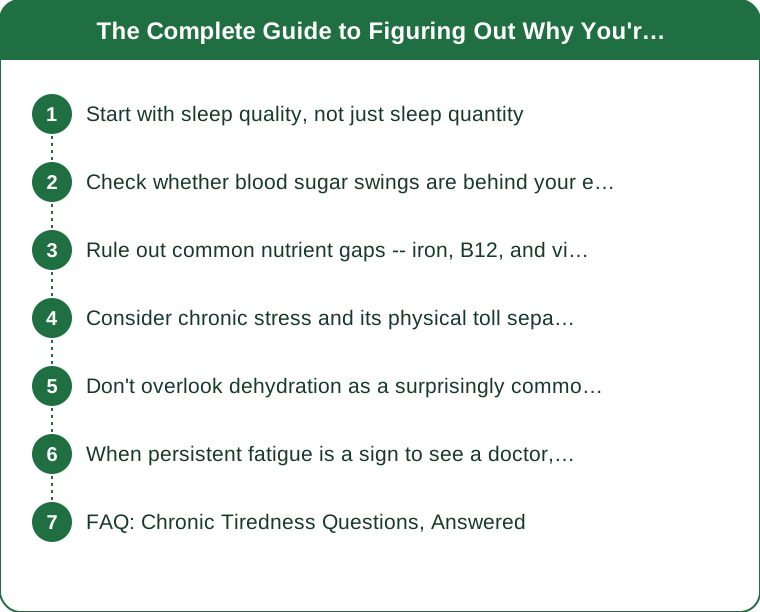
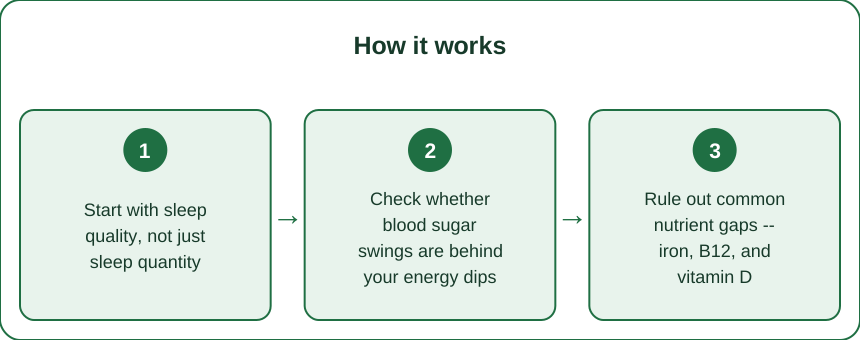
Start with sleep quality, not just sleep quantity
Getting eight hours logged doesn’t guarantee restorative sleep — fragmented sleep (frequent waking, even briefly, without remembering it) can leave you just as tired as short sleep does, and is far more common than people assume. Screen use before bed, irregular sleep and wake times, alcohol close to bedtime, and an overly warm bedroom are all common, fixable culprits for poor sleep quality even when duration looks adequate on paper.
A useful check: if you consistently wake up feeling unrefreshed despite 7-8+ hours in bed, quality (not quantity) is the more likely issue, and a consistent sleep-wake schedule is usually the single highest-impact fix to try first, for roughly 2 weeks before judging results.
Check whether blood sugar swings are behind your energy dips
Meals heavy in refined carbohydrates with little protein or fiber cause a rapid rise and subsequent crash in blood sugar, which reads physically as fatigue, brain fog, and sometimes irritability roughly 1-2 hours after eating. This pattern is especially common after large lunches built around bread, pasta, or sugary snacks without much protein alongside them.
A simple test: build one meal around the palm-fist-half-plate ratio (protein, carbs, vegetables) and note whether the afternoon energy dip is noticeably less severe than on a typical carb-heavy day — this alone identifies blood sugar as a contributing factor for many people.
Rule out common nutrient gaps — iron, B12, and vitamin D
Iron deficiency is a common, often under-recognized cause of persistent fatigue, particularly in menstruating women, and typically presents with tiredness that doesn’t improve with more sleep or better meals. B12 deficiency produces a similar pattern and is more common in people eating plant-based diets or those with certain absorption issues. Vitamin D deficiency, especially during shorter daylight seasons, is also linked to fatigue and low mood in many people.
A simple blood panel from a doctor checking ferritin, B12, and vitamin D is a low-cost, high-value step if fatigue has persisted for more than a few weeks despite reasonable sleep and diet.

Consider chronic stress and its physical toll separate from “feeling stressed”
Chronic low-grade stress keeps cortisol elevated in a way that can disrupt sleep quality, blood sugar regulation, and overall energy independent of how consciously “stressed” you feel day to day — some people carry significant physiological stress load without a strong subjective sense of being stressed. Signs this may be a factor include tiredness that doesn’t track with sleep or diet changes, tension headaches, or digestive changes alongside the fatigue.
Addressing this isn’t about eliminating all stress (unrealistic for most people) but building in genuine recovery windows — even 10-15 minutes of deliberate downtime daily measurably helps some people’s baseline energy over a few weeks.
Don’t overlook dehydration as a surprisingly common, simple cause
Even mild dehydration (a 1-2% drop in body water) is associated with measurable increases in perceived fatigue and reduced cognitive performance in research studies, and it’s one of the easiest causes to rule out. Many people underestimate daily fluid needs, especially in air-conditioned offices or during cooler weather when thirst cues are less pronounced.
A practical check: if you’re not drinking roughly half your body weight (in pounds) in ounces of water daily as a rough baseline, and haven’t tried increasing intake specifically, this is worth testing for a week before assuming a more complex cause.
When persistent fatigue is a sign to see a doctor, not keep self-adjusting
If fatigue persists for more than 2-3 weeks despite addressing sleep, nutrition, hydration, and stress, or if it comes with other symptoms (unexplained weight change, unusual shortness of breath, persistent low mood, irregular heart rate), it’s time for a medical evaluation rather than continued self-experimentation. Conditions like thyroid dysfunction, anemia beyond simple iron deficiency, sleep apnea, and depression all commonly present primarily as fatigue, and each requires a different treatment approach that self-adjustment alone won’t address.
Working through the checklist above first is genuinely useful for narrowing down likely causes, but it’s meant to inform that conversation with a doctor, not replace it if fatigue is persistent or severe.
FAQ: Chronic Tiredness Questions, Answered
How long should you try one fix before moving to the next possible cause?
Roughly 1-2 weeks per factor (sleep schedule, then diet timing, then hydration, etc.) is enough to notice a meaningful difference if that factor is a real contributor, without dragging out the process indefinitely.
Can more than one of these causes be happening at the same time?
Yes, very commonly — poor sleep and blood sugar swings, for example, often compound each other, which is exactly why a systematic, one-variable-at-a-time approach works better than changing everything at once and not knowing what helped.
Is caffeine ever actually part of the problem rather than the fix?
Yes — relying on increasing caffeine to offset an underlying, unaddressed cause (poor sleep, nutrient gaps) often just adds a caffeine-crash cycle on top of the original issue, masking the real problem rather than solving it.
TL;DR:
- Check sleep quality (not just duration) first — fragmented sleep is a common, overlooked cause
- Test whether blood sugar swings from meal composition are driving afternoon crashes
- Rule out iron, B12, and vitamin D gaps with a simple blood panel
- Consider chronic stress and mild dehydration as genuine, common, fixable contributors
This is general information, not medical advice — fatigue persisting more than 2-3 weeks despite these checks warrants a professional evaluation.
Keep Reading
This article is for general informational purposes only and is not medical advice. Always consult a qualified health professional for guidance specific to you.