Why Are You Always Tired? The Real Reasons (and the Fixes That Work)
Why am I so tired? may be the most-Googled health question women ask — usually at 3pm, usually with coffee already on board. The honest answer is rarely exotic: chronic tiredness almost always traces to a short list of boring, fixable causes, occasionally to a medical one worth testing for. Here is the systematic energy audit — run it top to bottom and most women find their leak. (And the disclaimer that matters: relentless fatigue despite fixing the basics deserves a doctor and bloodwork, not more caffeine.)

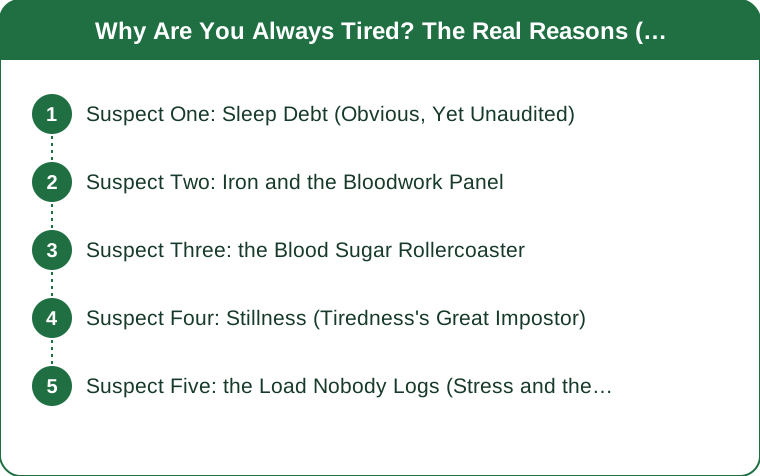
Suspect One: Sleep Debt (Obvious, Yet Unaudited)
Start with the unglamorous math: most women need 7–9 hours and many run on 6 to 6.5, accumulating a debt the weekend cannot fully repay — while inconsistent timing (the circadian wobble of 11pm-then-1am bedtimes) degrades even adequate hours. The audit: two weeks of honest tracking — actual lights-out, actual wake, screen-in-bed minutes confessed. The fix is equally unglamorous: a consistent wake time, a real wind-down, and the arithmetic of counting back 7.5 hours from the alarm. A shocking share of chronic tiredness resolves right here, at step one, for free.
Suspect Two: Iron and the Bloodwork Panel
The classic hidden cause in women: iron deficiency — with or without full anemia — driven by periods, pregnancies and plant-heavy plates, and presenting exactly as mysterious exhaustion, breathlessness on stairs, cold hands and unreasonable hair shedding. It is testable (ferritin, plus the basics) and fixable, but never guess-and-supplement: excess iron harms. While the needle is in, the same panel should check thyroid (the other great fatigue mimic, disproportionately female), B12 (especially plant-based eaters) and vitamin D. One tube of blood converts months of wondering into a targeted fix. This is the step tired women skip longest, and it should be step two.

Suspect Three: the Blood Sugar Rollercoaster
If energy crashes at predictable times — mid-morning after a pastry breakfast, the famous 3pm cliff after a carb-heavy lunch — the culprit is the spike-crash cycle: fast carbs alone send glucose soaring, insulin overcorrects, and the trough delivers fog, fatigue and cravings for another ride. The fixes are food-order and pairing, not deprivation: protein-anchored breakfasts (the day’s most leveraged meal), carbs dressed in protein or fat, vegetables before the bread, and a ten-minute post-lunch walk that flattens the curve muscles-first. Steady glucose reads, from the inside, as steady personality.
Suspect Four: Stillness (Tiredness’s Great Impostor)
The paradox with a mountain of evidence: inactivity causes fatigue — sedentary days produce more tiredness than active ones, and exercise trials on fatigued adults keep finding movement outperforms rest for energy. Mechanisms: circulation, mitochondrial signaling, mood chemistry, better sleep pressure at night. The audit question: does tiredness lift after a brisk walk? If yes, much of it was stillness wearing exhaustion’s costume. The fix scales down mercifully: ten-minute walks, movement snacks between meetings, the walk-after-dinner habit — energy spent on movement returns with interest, which no couch has ever offered.
Suspect Five: the Load Nobody Logs (Stress and the Invisible Shift)
Finally, the tiredness that sleep does not fix: chronic stress runs the body’s alert systems constantly (cortisol all day is exhausting by design), and women’s documented second shift — the remembering, coordinating, anticipating layer of household and care work — is real cognitive labor that never appears on any schedule yet drains like a job. Signs this is your suspect: waking tired after full nights, evening wired-tired, weekends that do not restore. Fixes are structural, not supplemental: boundaries with teeth, delegation and dropped standards where stakes are low, actual restorative time (not just collapsed scrolling), and — when the flatness deepens toward hopelessness — a professional, because persistent exhaustion is also depression’s most common opening line.
The energy audit, in order: sleep math first, bloodwork second, blood sugar third, movement fourth, and the invisible load fifth — most chronic tiredness lives in the first four, and all four are fixable this month. Start tonight with the wake-time anchor and book the blood panel this week. Coffee was never the answer; it was the loan. Time to fix the income.
Keep Reading
This article is for general informational purposes only and is not medical advice. Always consult a qualified health professional for guidance specific to you.